Test Drive Unlimited 2 Review: 2.5/5

It’s taken a while to get around to reviewing Test Drive Unlimited 2 – not because we haven’t been playing it, but partly because we wanted to make sure we cover all the angles after a slightly animated response from some people to our list of issues with the game. So in an  effort to make sure we’re fair, we ended up not writing about it – a situation we’re rectifying now for posterity and anyone who hasn’t already made up their minds.

The Test Drive series actually began in 1987, beating Need for Speed by seven years. And the decision to reinvent the series resulted in Test Drive Unlimited in 2007. It’s impossible to mention the sequel without referencing both the ambitious achievement of the first game in providing an open world MMO car game, and the fact that it had a number of problems with bugs. That time, the ambition definitely won out, with issues being relegated by the enjoyment of cruising round Hawaii with the window down and the radio on. We all have fond memories of awesome moments in TDU, and it’s got a special spot saved in the history of racing games.

So hopes were pretty high for Test Drive Unlimited 2 – after all, several ambitious ideas were mentioned in previews and interviews around the TDU launch which never made it into the game, so there were almost endless possibilities. And despite the fact the console hardware has remained the same, internet speeds and gaming innovations have moved on a lot since those days – although we might have been happier pre-Farmville.

But were those hopes met?

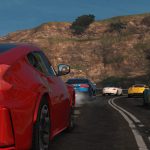
First the good news – graphically Test Drive 2 looks pretty good. Something with the geographical size of TDU2 requires the occasional allowance for draw distances, but in general the looks are pretty nice, and any shortcomings are pretty bearable. Certainly your first reaction will be to enjoy the world and scenery as it rushes past.

Handling hasn’t ever been a major selling point of the TDU games, and things have stayed the same for TDU2. Moving onto the more advanced settings for the handling model does improve things, and in general it’s not bad enough to be a major issue, but it occasionally gets frustrating during the licence test sections. Out on the open road you can hustle along at a fair pace whilst feeling in control.

The addition of Ibiza is a nice expansion, giving a bit more space and variety, even if air travel is a little bit of a hassle in the game (although nowhere near as bad as the reality of airports).  Obviously picking two fairly warm and sunny locations does mean that the jump isn’t as pronounced as if they’d picked somewhere more radical, and some of the scenery on both islands does look fairly similar. Hopefully the Isle of Wight or the Scilly Isles are next on the list for inclusion.

There’s a reasonable selection of cars – although the car list has drawn some complaints on this site about a lack of variety. It would have been nice to have seen more classics and legendary cars, as those are the ones which really get the emotions going as you cruise around – and they’ve also got more variety in interiors etc. But you get a classic Mustang early on if you fancy a muscle car, and you’ll soon be able to afford the classic E-types etc, even if the Ferraris might take a little longer.

And there’s certainly enough content to consider it value for money. In addition to the plot-based racing elements, there is more opportunity to take on a variety of challenges around the islands, whether it’s the traditional time-based random challenges, finding photographic spots, or discovering wrecks to unlock additional cars. You could argue that the extra missions tend to be ‘find x location’ but if you don’t like those type of challenges and some leisurely drives around the island, then you’re probably not really a TDU fan in the first place. And there are some lovely touches, such as the road signs actually giving useful information when you need to find a town.

In terms of online gaming, the random encounters with the closest players on the server are some of the most interesting experiences the game has to offer, as whether they’re enjoyable or not completely rests on the other player. We’ve had high level players intent on just ramming us off the road every few seconds to the point of frustration turn into them leading us to a target location when they realised we were lost and looking for a wreck.

Club racing and multi-player racing are still there, along with setting time trial routes for online competitors, and all are functional – although the club element still has some foibles and glitches.

And that leads us nicely into the downsides, which we’ve previously covered in a reasonable fashion but are worth restating.

First up, the plot and all characters involved are terrible. TDU2 hovers somewhere between aspiring for the humour of Grand Theft Auto, and plumbing the depths of the world’s campest and worst soap opera, and never quite manages to reach either target. Every character is a bad stereotype, including your valet-turned-racer, and it’s hard to fathom why you’d be trying so hard to join a racing fraternity which is often akin to hearing nails down a blackboard.

The voice acting doesn’t help – it appears that pretty much every character is somewhere in between camp and creepy, and the amount of repetition in the introduction screens for races will make you weep ‘The Wilder brothers are at it again’ in your sleep.

Add in the fact that you’ll be bouncing off the rev limiter for large periods of time in cars which really start to grate, and the fact that you’re given a choice of just two radio stations, and it’s a flashback to the days of playing music on a stereo to accompany your gaming. In previews for the first TDU, Eden talked about streaming real radio stations into the game, and that would have been a great solution, even if it was an option for those with enough bandwith. Alternatively, if you’re going to create ‘humourous’ fake radio stations, they have to be as good as those in Grand Theft Auto. These aren’t.

The plot is a nice idea, and race school licence tests aren’t a bad way to introduce elements of the gameplay and car handling – but there are far too many, with too many challenges, and with too many elements which highlight the fact the handling model isn’t great on accuracy and car control. If you’ve got a vague car handling model, I’d suggest skipping the ‘slalom through tight cones in the rain’ tests for example.

And the addition of F.R.I.M is similarly challenging. In the offline mode it works quite well to entertain and earn some extra cash as you drive around the islands, giving you bonuses for near misses, high speeds etc. But when you’re always connected to the nearest players, and their instinct is generally to barrel into you as soon as they see you, the only way to actually enjoy the F.R.I.M accumulator is to either avoid anyone on your map like the plague or play offline and defeat the point of an MMO. Plus, and this is a matter of personal taste, it does also feel quite hard to ignore, which means you lose that relaxed, cruising feeling of TDU, because you’re constantly thinking that really you should be earning some cash. It’s akin to someone constantly telling you that you should get off the sofa and do something productive with your life.

The overriding feeling is a lack of polished ambition. There are numerous other bugs, including some which can kill your save game and leave you trapped in your garage (As happened to me 3.5 hours in). You can find some audio bugs, including some bizarre engine noise related ones. The tuning and upgrades sometimes make your car slower. The map is still an absolute pain in the ass to use. Some achievements are only available in the casinos which were exclusive for pre-order copies of the game. The ‘tail my girlfriend’ missions have a terrible difficulty curve which essentially require you to know in advance when the target vehicle will be accelerating quickly. Every single item of clothing and styling appears to be taken from a parody of metrosexual clubbing gear.  And that voice acting deserves another mention, just because it’s so painfully bad, and yet never so bad it’s actually funny or enjoyable.

That last paragraph may seem like we don’t enjoy Test Drive Unlimited 2, but that isn’t true.  There are truly magical moments, such as the sun coming up as your drive down the coast road in a gorgeous supercar, but the problem is that we were delighted by that in the original Test Drive Unlimited. And although a side-by-side comparison with the earlier game reveals more of the improvements that have been made, four years have passed, and the bar for a lot of games has been set higher and higher. Eden are still to be applauded for doing something radically different with driving games, and doing it successfully enough to come back with a sequel – Criterion may have also managed it with Burnout and Need for Speed: Hot Pursuit, but Bizarre Creations failed with Blur despite their PGR experience, and Black Rock Studios (formerly Climax) had similar problems with Split/Second despite their previous form with the original Xbox MotoGP games.

Summing up TDU2 reminds us of another car porn experience, when the Top Gear presenters describe their adventures as ‘ambitious but flawed’. If you can overlook the numerous bugs, the terrible characters, and the painful audio, then there’s a lovely slice of car-based exploration with some enjoyable online racing, and some bearable single-player races and challenges. But as much as some people absolutely love and adore it with a passion bordering on obsession, there’s a larger number of people who are desperately hoping that Test Drive Unlimited 3 might be the game we’ve been hoping for since the original was announced.

2.5/5

10 Things I Hate About TDU2

Back in 2006, Test Drive Unlimited was a bit of a revelation. The first MMO racing game for consoles, it featured 125 cars, 1000s of miles of roads, and gave racing fans the chance to experience an open world and the chance to race other online gamers as they encountered them on the island.

And yet, five years later when Test Drive Unlimited 2 arrived, the response from gamers all around the web has been a mixture of frustration and feeling rather underwhelmed, and it’s one that I share. It doesn’t feel like an evolution of the game, but a remake with many of the problems of the first game unsolved, plus a couple of new ones…

So even though there is much to praise, and it’s still an enjoyable game, here’s the 10 Things I Hate About TDU2

  1. Game Killing Bugs: Any game which is this ambitious is likely to have a number of bugs in it – that’s the nature of crafting something so massive and open. And most of the numerous bugs are pretty forgivable. But there are a small number which will completely destroy your game. My favourite was finding myself trapped in the garage of my first house, 3.5 hours into the game, with no way to exit as the game would freeze every time the garage animation began. In the end I gave up and restarted. Which meant another chance to be annoyed by number 2 on the list.
  2. The race schools: The handling model of both TDU games has been pretty ‘loose’ and has never been about accuracy. That isn’t a problem when you’re cruising the highways of Ibiza and Hawaii with the windows down, but it’s a massive problem when someone decides you have to perform pointless slalom tests in order to race in better cars. Why create an open world where everything relies on money, and then limit it with inane challenges which are a monumental waste of time?
  3. The characters and voice acting: The character design definitely treats every racer as a metrosexual fashionista, which isn’t quite the macho image most people would probably associate with driving fast cars and racing (Even if the truth is somewhat different). But the voice acting takes it to a new level, where you can’t decide whether it’s meant to be comedy or just annoying. You start the game by dreaming and aspiring about female characters revealed as shallow idiots, race against guys which seem to have come from the books of a male model agency, and have to put up with incredibly repetitive voice tracks at the start of every race etc.
  4. F.R.I.M: Allowing you to earn money when you’re driving around isn’t a bad idea, and encourages you to drive rather than warp to locations. There’s a payoff that it isn’t as relaxing to just cruise, as you’re constantly aware you could be earning cash, but that’s a reasonable trade-off. The problem comes when playing online, as it’s guaranteed some nearby player will pile into you just as you’re levelling up.
  5. Uneven encounters: Following on from that is the major problem with encountering other players – if you’re stuck in a low or mid-level car, all you’ll find will be people in Zondas or similar constantly challenging you. And even if you own one, you can’t switch from the sensible hatchback or 4×4 you’re in at the time.  And if you refuse, you’ll find yourself being used as a crash test dummy until the faster car gets bored. It’s enough to make the online side of the game redundant except for the structured races.
  6. Two radio stations: Seriously? That’s it? Prior to the launch of the first game, Eden were publicly talking about their idea to have live streaming radio contained within the game. But even without the data problems that might create, the GTA series has provided a great example of creating bespoke in-game radio stations packed with great music and bearable DJs in-between. Eden limited the challenge to creating just two stations, and still filled them with B-league songs and Z-league talk.
  7. The ‘follow my girlfriend’ missions: Missions where you have to tail someone are generally irritating, even when done well. But in TDU2 they not only involve helping yet another character you’d rather punch, but the gap between you and your quarry isn’t elastic enough to account for them pulling onto a freeway and instantly pulling out a big gap while you accelerate. Which basically means you have to retry each one until you know all the acceleration points in advance, despite the fact the target car has never left your sight at any time.
  8. The cars and the sounds they make: Most of the comment when we published the official car list complained it wasn’t large or varied enough, and the classics were limited. What we didn’t also know is that turning off the radio stations to preserve your sanity then reveals some engine noises which are pretty bad. Forget the hearty rumble of a V8 as you cruise the streets, and instead prepare for an incessant high-pitched whine as you spend 19 miles flat out on a freeway.  One bystander has put up with us playing games for 10+ years, and has nominated the sound of TDU2 as the most irritating she’s ever heard.
  9. Maps and Islands: When it’s all about driving, why do I spend so much time having to access and zoom in, and out of maps using a fairly clunky interface? And every time it breaks the amount of F.R.I.M collected thus far? For the first few hours that was enough, but then I had the pleasure of knowing all my Xbox Live friends were racing together on an island I couldn’t even get to, without going through another painful racing school experience. My reward? Straight into a racing school on Hawaii.
  10. A lack of polished ambition: There are lots of things we like about TDU2. And some of the newer features are quite nice, but they all seem slightly unfinished. For instance, the decal editor which doesn’t allow you to delete individual layers. Or the tuning and upgrade bug which means sometimes they make cars go slower. There isn’t enough innovation to justify the level of bugginess, or enough polish to justify the limited ambition.

That’s not to say that you can’t have an enjoyable time with Test Drive Unlimited 2, but you’ll need to be prepared to accept the limitations…

So is there anything we’ve missed?

TDU2 bug response – patch and premium DLC pack for free

The release of Test Drive Unlimited 2 has not gone without problems, as a number of bugs have been discovered, particularly around online connectivity and save game corruptions. An open letter to the TDU2 community from publishers Atari and developers Eden has confirmed that a patch is now live for the PC version, and is in approval for the Xbox 360 and Playstation 3 editions.

It also states that the first DLC pack, which was initially to be released as premium paid content, will now be made available for free on all platforms – the ‘Exploration Pack’ contains new wrecks to discover, which will unlock the Lancia Stratos version Rallye and 1969 Dodge Charger.

The patch fixes the following issues:

  • Logging into the game has been improved
  • Once into the game the online network experience is now much more stable in all areas
  • Save games no longer corrupt
  • Existing corrupted save games will be repaired in many cases
  • Friends lists are now populated
  • Invites now work correctly
  • Clubs have been brought back online
  • Exploits to gain money have been fixed
  • Casino access has been improved
  • Players will no longer lose money because of the Casino bug

The news of better online connectivity and the save games fix will be a huge boost to those who have already bought the game, and means that it’s easier to recommend it as a more relaxing and chilled online driving game. You can pick up a copy at Amazon, Gamestop, Game, Play.com and other software retailers….

Test Drive Unlimited 2 – Launch Trailer

Test Drive Unlimited 2 – PS3 / X360 / PC – Character Customization

Test Drive Unlimited 2 – PS3 / X360 / PC – Mercedes Trailer

Test Drive Unlimited 2 – Full Official Car List
Test Drive Unlimited 2 is a particularly interesting take on the racing genre as it mixes traditional racing games with the ideas of MMORPG online worlds. Updated 24/02/2011 – details of the Exploration Pack free DLC at bottom of post…
The official car list for Test Drive Unlimited 2 is (descriptions provided by the Atari/TDU team):

AC 427

This famous 1960′s 2-seat roadster, designed by Shelby Cobra, featuers a 7 litre big block Ford V8 developing over 400bhp going from 0-60 in 4.20 seconds.

Alfa Roméo/Fiat 8C Competizione

This limited edition Italian sports car features 4.7-litre V8 assembled by Ferrari, 480 N-m of torque, a computerized six–speed transaxle gearbox has gear selection with official top speed is announced to be 292 km/h (181 mph). Oh yea, there are only 500 ever made.

Alfa Roméo/Fiat Brera Italia Independent

Made in association with Italia Independent, this special limited edition Italian sports car features a 3.2 V6 petrol engines, six-speed transmission and Q4 all-wheel drive, electronic Q2 limited slip differential, direct injection and variable valve timing in both inlet and exhaust cams, allowing for a top speed of 250 kilometres per hour (160 mph).

Alfa Roméo/Fiat MiTo Quadrifoglio Verde

The Quadrifoglio Verde (English: green four-leaf clover) has traditionally been the highest line of Alfa Romeo models. The QV version has the new 1.4 litre 170 PS (125 kW; 168 hp) Multiair engine and newly engineered suspension, steering and new six-speed C635 gearbox developed by Fiat Powertrain Technologies (FPT).

Alfa Roméo/Fiat 8c Spider

Alfa Romeo unveiled the 8C Spider, a roadster version of the Competizione coupé. The Spider concept was built by Carrozzeria Marazzi. Alfa Romeo claims that the 8C Spider’s top speed is 290 kilometres per hour (180 mph), which makes it slightly slower than the coupe version. The brakes on the Spider are Brembo carbon-ceramic units.

Alfa Roméo/Fiat Delta integrale evoluzione

The 1993 edition of the Delta HF integrale featured an updated version of the 2-litre 16-valve turbo engine to produce more power, as well as a three-way catalyst and Lambda probe.

Ariel Atom 300 Supercharged

Race specification components are specified throughout the Atom V8 and reflect the extraordinary levels of performance that the car offers. With over 500bhp available the Atom V8 has a power to weight ratio in excess of 900bhp per tonne.

Ascari A10

Ascari A10 is an automobile produced by the British company Ascari Cars that was conceived by Dutch millionaire Klaas Zwart. It is a road-going evolution of the KZ1-R GT race car currently contesting the Spanish GT Championship, with both cars penned by ex-Formula One designer Paul Brown.

Ascari KZ1 R Limited Edition

Ascari KZ1R Limited Edition was unveiled at the Goodwood Festival of Speed back in 2008. With 520BHP, 0-60mph in 3.0 seconds and max speed of 200mph, Ascari KZ1R is one of the most exciting Ascari productions.

Aston Martin DBS Carbon Black Edition

The DBS Carbon Black is largely a cosmetic revision of Aston’s already potent DBS. The car’s name stems from the custom “Carbon Black” paint which was specially formulated to include a subtle metallic twist.

Aston Martin V12 Vantage Carbon Black Edition

The car boasts 510-horsepower with 420 pound-feet of torque and a 6.0-liter V-12 engine. All this enables this Aston Martin to top speeds of 190mph. It takes just 4.2 seconds to cross the 60mph mark.

Aston Martin DB9 Coupe

The Aston Martin DB9 is a GT sports coupé launched by Aston Martin in 2004. The DB9 is the first model to be built at Aston Martin’s Gaydon facility in Warwickshire, England.

Aston Martin DBS Coupe

The Aston Martin DBS is a 6.0-litre V12 powered, race-bred, two-seater shaped by the aerodynamic demands of high performance, with an exquisite interior that marries beautifully hand-finished materials with the very latest in performance technology

Aston Martin DB9 Volante

The Aston Martin DB9 is a thoroughbred sports car with GT levels of comfort and refinement. Combining Aston Martin’s unique character with an uncompromising design philosophy, the DB9 was borne out of a synthesis of traditional craftsmanship, high-tech manufacturing, modern components and use of the finest materials.

Aston Martin V8 Vantage

At the heart of every great sports car is a great engine, and the V8 Vantage Coupe and Roadster are powered by Aston Martin’s 313 kW (420 bhp) 4.7-litre V8, developed for both flexibility and outright performance. The V8 also sounds spectacular and is capable of propelling the car to a maximum speed of 290 km/h (180 mph).

Aston Martin V12 Vantage

Based on the hugely successful V8 Vantage, the V12 Vantage features a 6.0-litre V12 engine producing 510 bhp (380 kW / 517 PS), and 570 Nm (420 lb ft) of torque with a top speed of 190 mph (305 km/h) and 0-62 mph (0-100 kp/h) time of 4.2 seconds.

Aston Martin One-77

One-77 fuses advanced technology with stunning Aston Martin design to create possibly the world’s most desirable automotive art form. Based on a sophisticated carbon fibre chassis with a handcrafted aluminium body, this 7.3 litre V12 super car will deliver exhilarating performance for a strictly limited number of discerning customers.

Audi RS 5 Coupé

The Audi RS 5 Coupé uses a high-revving, normally aspirated V8 displacing 4,163 cc. The high-revving 4.2-liter V8 pumps out a hefty 331 kW (450 hp), yet uses fuel extremely efficiently. The 4.2 FSI delivers 331 kW (450 hp) at 8,250 rpm, with the peak torque of 430 Nm (317.15 lb-ft) available between 4,000 and 6,000 rpm.

Audi Q7 V12 TDI quattro – TDU2 Inuit Edition

The Q7 V12 TDI Inuit is a concept version of Q7 V12 TDI with Inuit white interior with wood decoration. The design theme was inspired by luxury yachts. It features a carbon ceramic brake setup featuring eight-piston calipers up front, four piston units in the rear.

Audi Q7 V12 TDI quattro

The Q7 V12 TDI will roll on 20-inch rims standard and will be halted thanks to a carbon ceramic brake setup featuring eight-piston calipers up front, four piston units in the rear. Exterior changes include modifications to the front bumper and grille, headlamps, exhaust outlets and stainless steel underbody plates.

Audi R8 Coupé 5.2 FSI quattro

Audi R8 Coupé 5.2 FSI quattro is a 5.2-liter V10-powered R8 with 518 horsepower and 391 lb/ft. of torque, there is no shortage of power in this mid-engine monster. With peak horsepower achieved at 8,000 RPM, the FSI V10 loves to rev.

Audi RS 6 Avant

The Audi RS 6 redefines the term high performance in the business class. With its 426 kW (580 bhp), it is the most powerful model in the current Audi range and with the exception of pure racing cars like the Le Mans-winning Audi R10 TDI, the most potent Audi of all time.

Audi S3

The Audi S3 is a hot hatch version of the Audi A3 small family car, produced by German automaker Audi since 1999. S3 variants of both the first- and second-generation Audi A3 have been produced.

Audi S5 Coupé

The latest model year features Audi’s direct-injection 4.2-liter V8 engine, which is basically a de-tuned version of the one found in the RS4 and R8, and produces 354hp and 325lb-ft of torque instead of the 420 hp /317 lb-ft.

Audi TTS Coupé

The TTS is a capable all-arounder — not just a straight line missile. In full-on sport mode, the dual-clutch ‘box holds each of its six gears to high revs and shifts at the 6800-rpm max with a palatable “braap! braap!” from its quad pipes. Its 258 pound-feet of torque is available between 2500 to 5000 rpm.

Audi TT RS Roadster

Audi TT RS has a turbocharged 2.5-liter engine with direct gasoline injection; it produces 250 kW (340 bhp) and 450 Nm (331.90 lb.-ft.) of torque. The blazing five-cylinder engine enables the Audi TT RS to perform extraordinary feats.

Audi R8 Spyder 5.2 FSI quattro

The 5.2 Liter FSI V10 in the R8 Spider delivers a maximum output of 525 HP at 8,000 RPM and has a rather high compression ratio of 12.5:1 in order to get the most out of the high revving naturally aspirated power plant. With a weight of only 3,792 pounds, the R8 Spider is able to sprint from 0 to 60 MPH in under 4.1 seconds; go from 0 to 125 MPH in a little over 12.7 seconds and reach a top speed of 194.49 MPH.

Bugatti Veyron 16.4 Grand Sport Sang Bleu

Bugatti Veyron Grand Sport Sang Bleu has blue-tinted carbon-fiber bodywork to complement its polished aluminum accents. At first glance, it looks like any other run-of-the-mill blue and silver Veyron, but up close, the blue weave is spectacular. It has a brilliance and depth that normal paint finishes—and even standard carbon fiber—cannot match.

Bugatti Veyron 16.4 Centenaire

Some of our sources confirm the fact that the new vehicle will deliver almost 1350 hp while the top speed will be increased to over 420 km/h.

Bugatti Veyron 16.4 Grand Sport

The 16-cylinder, quad-turbocharged engine with 1,001 horsepower and 922 lb-ft of torque is programmed not to let you damage it, so put it to the test!

Bugatti Veyron 16.4

The Bugatti Veyron EB 16.4 is a rear mid-engined grand touring car. The Super Sport version is the fastest road-legal car in the world, with a top speed of 431.07 km/h (267.85 mph).

Bugatti Veyron 16.4 Super Sport

The new Veyron 16.4 Super Sport comes with four enlarged turbochargers and bigger intercoolers that have been used to boost the power of the 16-cylinder engine to a total of 1200 HP, the chassis has been extensively redesigned to maintain safety at extreme speeds – thanks to a slightly raised main-spring travel, stronger stabilizers, and new shock absorbers with a complex architecture originally developed for racing cars.

Caterham CSR 260

The CSR has two engine options based on the same Duratec block, though modifications and power output differ. The entry level engine produces 200 bhp (150 kW), with a 0-60 mph time of 3.7 seconds. The upgraded engine produces 260 bhp (190 kW), with a 0-60 mph time of 3.1 seconds and a top speed of 155 mph (249 km/h).

Caterham Superlight R500

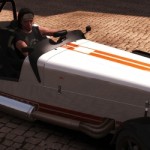
Caterham Superlight R500 combines the tuned 2.0 liter Ford Duratec engine with ultra-lightweight to produce a real stunner, but without the cost or complication of the V-8 in the RS Levante. The R500 has a power-to-weight ratio of 520 bhp per tonne, or more realistically, 450 bhp per tonne with a driver aboard.

Chevrolet Camaro Synergy Special Edition

Based on the Camaro 1LT, the limited model uses a 3.6-liter direct-injection V6 providing 304 horsepower and up to 273 ft-lb of torque. The engine is mated to either a six-speed manual or automatic gearbox.

CITROËN 2 CV

The Citroën 2CV, literally meaning “two tax horsepower” is technologically advanced and innovative, but with uncompromisingly utilitarian unconventional looks, and deceptively simple Bauhaus inspired bodywork, that belied the sheer quality of its underlying engineering.

Dodge Charger SRT8

Expect to see a fairly intense power boost compared to the current Dodge Charger SRT8 which pumps out 425 horsepower from it’s 4.1-liter HEMI V8 engine.

Dodge Viper SRT10

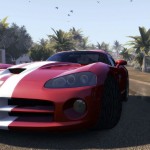
The Dodge Viper SRT10 is Dodge’s flagship supercar model. It is a two-door, two-seat vehicle based on the Dodge Viper. The Viper SRT10 originated in 2003 as a roadster boasting an 8.3 liter V10 producing a staggering 500 HP.

Ginetta F400

The F400 also incorporates a flat floor the full length of the car, joining the front splitter and rear diffuser, which provides exceptional downforce giving excellent handling qualities. With the large fuel tank and lightweight carbon fibre body, touring is made simple and enjoyable.

Ferrari 612 Sessanta

Ferrari 612 Sessanta is a limited version ,it was released on 60th anniversary of the company, with only 60 cars ever produced. It includes 19-inch forged aluminum wheels, black chrome exhaust tips and Ferrari’s F1 gearbox, 3-position electrochromic glass roof, steering wheel with start/stop button, Bose entertainment unit.

Ferrari 599 GTB Fiorano China Edition

Ferrari 599 GTB Fiorano China Limited Edition is especially designed for China. The models come in a two-tone color scheme, featuring a special Rosso Fuoco “fire red” body color mated to a grey roof; infused with Chinese elements by the artist Lu Hao. The Ferrari 599 GTB Fiorano China Limited Edition is powered by the same 6.0-litre V12 engine developing 456 kW and 608 Nm of torque.

Ferrari 308 GTS Quattrovalvole

The 4-valve per cylinder Quattrovalvole or QV model pushed output back up to 245 hp (179 kW) restoring the performance.

Ferrari 612 Scaglietti

The Ferrari 612 Scaglietti is a grand tourer produced by Ferrari since 2004. It is a large two door fastback coupé. The 612 Scaglietti was designed to replace the smaller 456 M; its larger size makes it a true 4 seater.

Ferrari California

The Ferrari California is the first Ferrari Gran Turismo with a mid-front 8-cylinder engine: a vehicle that uncompromisingly combines sportiness with versatility, guaranteeing the maximum driving pleasure characteristic of cars from Maranello.

Ferrari Dino 246 GTS

The Dino models used Ferrari racing naming designation of displacement and cylinder count with two digits for the size of the engine in deciliters and the third digit to represent the number of cylinders, i.e., 246 being a 2.4 litre 6 cylinder and 308 being a 3.0 litre 8 cylinder.

Ferrari Enzo

The Enzo Ferrari is a 12 cylinder mid-engine berlinetta named after the company’s founder, built in 2002 using Formula One technology, such as a carbon-fibre body, F1-style electrohydraulic shift transmission, and Carbon fibre-reinforced Silicon Carbide (C/SiC) ceramic composite disc brakes.

Ferrari 430 Scuderia

The Ferrari F430 is a sports car that was produced by the Italian automaker Ferrari from 2004 to 2009, as a successor to the 360. It debuted at the 2004 Paris Motor Show.

Ferrari 599 GTB Fiorano

The 599 GTB Fiorano (internal code F141) is an Italian gran turismo produced by Ferrari. It is the brand’s two-seat flagship, replacing the 575 M Maranello in 2006 as a 2007 model.

Ferrari Scuderia Spider 16M

The Scuderia Spider 16M is a special limited series of just 499 unique cars, dedicated to the most passionate drivers. The car combines a 510 hp provided by its V8 engine and a power-to-weight ratio of 2.6 kg/hp, means that it delivers blistering 0-100 kph acceleration in just 3.7 seconds and a superb top speed of 315 kph.

Ferrari 599 GTO

Ferrari’s fastest-ever road car is a street-legal version of the 599XX. The GTO is capable of impressive times–to the tune of 0 to 62 mph in just 3.35 seconds and a Fiorano lap time of 1 minute, 24 seconds. The GTO clocks a top speed of 208 mph.

Ferrari FXX “Evoluzione”

The Ferrari FXX is a high performance race car built by automobile manufacturer Ferrari in Maranello, Italy. The FXX is based on the street-legal Enzo.

Ferrari 458 Italia

The Ferrari 458 Italia, launched at the IAA Frankfurt Motor Show 2009, is an 8-cylinder two-seater berlinetta with a mid-rear mounted engine, and represents a genuine break with the past in terms of Maranello’s previous high-performance sports cars.

Ford Shelby GT500

Introduced at the 2003 New York International Auto Show, the GT500 uses a 5.4 L (330 CID) Modular 500 hp (370 kW) supercharged V8. Features include the Tremec TR-6060 6-speed manual transmission, suspension tuning, a body kit, and 18 inch wheels.

Ford Mustang Fastback

In 1966, the Fastback featured a redesigned grille, new instrument cluster, and new styled wheels – featuring side racing stripes which took the place of chrome rocker panels, giving the vehicle a serious performance racing look.

Ford GT

The Ford GT is a mid-engine two-seater supercar that features many new and unique technologies, including superplastic-formed aluminum body panels, roll-bonded floor panels, a friction stir welded center tunnel, a “ship-in-a-bottle” gas tank, a capless fuel filler system, one-piece door panels, and an aluminum engine cover with a one-piece carbon-fiber inner panel. The car has 690 hp (515 kW; 700 PS) at 7000 rpm and 610 ft•lbf (827 N•m) at 3800 rpm of torque. A Ricardo six-speed manual transmission is fitted featuring a helical limited-slip differential.

Ford Mustang GT

The Mustang GT used an aluminum block 4.6 L SOHC 3-valve Modular V8 with variable camshaft timing (VCT) that produces 300 hp (224 kW). The Mustang GT featured the same automatic transmission as the V6 model, but the 5-speed manual is equipped with a heavier duty Tremec TR-3650 5-speed.

General Motors Chevrolet Camaro 2SS ou Camaro SS

Chevy Camaro is an excellent performance-car value whether it’s equipped with the base direct-injected V6-powered base Camaro can sprint to 60 mph in 6.0 seconds, thanks to 300 horsepower.

General Motors Hummer H3

The H3 features a two-speed, electronically controlled full-time four-wheel drive system that is suitable for both on-road and off-road driving in all conditions. The H3 has maximum towing capacities of 3,000 pounds (1,400 kg) for the straight-5 with manual transmission, 4,500 pounds (2,000 kg) for the straight-5 with automatic transmission, and 6,000 pounds (2,700 kg) for the V8 with automatic transmission.

General Motors Chevrolet Camaro LT

The LT is powered by a 304-hp direct-injected 3.6-liter V6 with a six-speed manual or an optional six-speed automatic transmission. The LT adds fog lights, 18-inch alloy wheels and power driver’s seat, while the SS features unique front fascia, sport suspension, Brembo brakes, limited slip differential, a rear spoiler and heated leather seats.

General Motors Corvette C1

The Chevrolet Corvette (C1) is the first generation of the sports car by the Chevrolet division of General Motors introduced late in the 1953 model year and produced through 1962. It is commonly referred to as the “solid-axle” generation, as the independent rear suspension didn’t appear until the 1963 Sting Ray

GUMPERT apollo sport

The Gumpert Apollo is a sports car produced by German automaker Gumpert Sportwagenmanufaktur GmbH in Altenburg. The Apollo is a street-legal race car with a mid-engined, rear wheel drive two-seater constructed on a tubular chromoly frame, with fiberglass or optional carbon fiber body panels.

Jaguar XKR Speed Pack and Black Pack

Coupés fitted with the Speed Pack get a modified front splitter and a bigger rear spoiler aimed at improving high-speed stability as well. The Speed Pack is also available in conjunction with a so-called Black Pack, which adds further visual excitement in the form of black gloss alloy wheels, black gloss exterior trim, and red brake callipers.

Jaguar D-type

The Jaguar D-Type, like its predecessor the C-Type, was a factory-built race car. Although it shared the basic straight-6 XK engine design with the C-Type, the majority of the car was radically different.

Jaguar E-TYPE

The Jaguar E-Type is a British automobile manufactured by Jaguar between 1961 and 1975. Its combination of good looks, high performance, and competitive pricing established the marque as an icon of 1960s motoring.

Jaguar XKR

The supercharged variant is known as the XKR. The first-generation XK series shares its platform with the Aston Martin DB7. Both cars are derived from the Jaguar XJS, though the platform has been extensively changed.

Koenigsegg CCXR Edition

The Koenigsegg CCXR Edition is a limited edition of the Koenigsegg CCXR manufactured in 2008, only available by special order in a very limited run of 4 production models.

Land Rover – Range Rover Sport

The Range Rover Sport made its first appearance in late 2004, in concept car guise as the Range Stormer. This low-slung, short wheelbase 3-door coupe sports split-folding gullwing doors, one-piece skeletal seats and 22 inch alloys.

Lotus 2-Eleven

The Lotus 2-Eleven is a car produced by British car manufacturer Lotus. It is based on the Lotus Exige S, and thus has the same supercharged 2ZZ-GE engine. Weighing 670 kg (1,477 lb) and with 252 bhp (188 kW), the 2-Eleven can sprint from 0-60 in 3.8 seconds and has a top speed of 150 mph (241 km/h).

Lotus Esprit S3

Introduced in April 1981, the Turbo Esprit and S3 Esprits’ body is a glassfibre-reinforced plastic body with galvanised steel backbone chassis, passenger compartment encapsulated in a ‘safety-cell structure’, a five-speed manual unit transmission, rear-wheel drive, dual braking system, split front/rear circuits, and rack-and-pinion steering.

Lotus Evora

The Lotus Evora is based on the first all-new vehicle platform from Lotus Cars since the introduction of the Lotus Elise in 1995 (the Exige, introduced in 2000, and the 2006 Europa S are both derivatives of the Elise). The Evora is the first vehicle of three vehicles to be built on the same platform; the remaining two vehicles will be on sale by 2011.

Mercedes-Benz SLR McLaren Roadster 722s

Mercedes-Benz SLR McLaren Roadster 722 S opens up astonishing dimensions when it comes to open-top driving. Delivering 478 kW/650 hp, acceleration from 0 to 100 km/h in 3.7 seconds and a maximum speed of 335 km/h, this two-seater cabriolet surpasses the existing benchmark among open-top super sports cars.

Mercedes-Benz SLR McLaren Stirling Moss

The SLR Stirling Moss is a limited edition (75 vehicles) of the McLaren SLR series. The supercharged V8 engine is rated 650 PS (480 kW; 640 hp). The car’s top speed is 350 km/h (220 mph) with acceleration from 0–100 km/h in less than 3.5 seconds. The car is approximately 200 kg (440 lb) lighter than the regular model.

McLaren MP4-12C

McLaren MP4-12C is a sports car set to be launched in 2011. The MP4-12C features a carbon fibre composite chassis, and will be powered by a mid-mounted McLaren M838T 3.8-litre V8 twin-turbo engine developing approximately 592 bhp (441 kW; 600 PS) and around 443 lb-ft (601 N-m) of torque. The car makes use of Formula 1-sourced technologies such as “brake steer”, where the inside rear wheel is braked during fast cornering to reduce understeer.

Mercedes 300 SL GullWing

Mercedes-Benz 300SL Gullwing was introduced in 1954 as a two-seat, closed sports car with distinctive gull-wing doors. It has 4-speed manual rear wheel drive, standard axle ratio 3.64:1., double wishbones, coil springs, stabilising bar, and a 6-cylinder-inline, front-mounted engine.

Mercedes-Benz CLK 63 AMG Black Series

Mercedes-Benz CLK63 AMG Black Series-a super coupe expressly designed for running at the front of the pack.

Mercedes-Benz ML 63 AMG

The ML 63 upgrades the standard M-Class sports utility vehicles with an AMG-designed bodykit, a lowered sports suspension with active shock absorber control, AMG wheels, and numerous standard features. The AMG-calibrated Airmatic sport suspension features Mercedes’ Adaptive Damping System that allows the driver to adjust the cush-versus-sport factor of the ML 63 at the touch of a button.

Mercedes-Benz SLK 55 AMG

The SLK 55 AMG is a high-performance variant of the successful SLK-Class roadster from Mercedes-Benz. As with all AMG models, the SLK 55 sports wider fenders, a lower stance, quad tailpipes, enlarged air intakes, and, of course, a more powerful engine.

Mercedes-Benz SLS AMG

The SLS AMG is designed to be a modern 300SL Gullwing revival. The car has a long hood, the passenger compartment is close to the rear axle and the rear of the car is short. The SLS AMG will also adapt the feature of wing doors that will swing open upwards on gas struts, not in a mix of upwards and forward like the SLR. In case of a roll-over, the doors can be fully detached to allow the occupants to leave the vehicle.

Nissan 370Z Optional Parts

The 370Z comes with a promise of improved aerodynamic performance, zero lift and higher downforce with an insignificant effect on the drag value, and Nismo S-Tune Performance Package.

Nissan 370Z

Powered by a VQ37VHR 3.7 L (230 cu in) DOHC V6 with Variable Valve and Lift Control the Nissan 370Z produces 332 bhp (248 kW; 337 PS). Power delivery to the rear wheels comes through a new 7-speed automatic transmission with paddle shifters or 6-speed manual transmission features the world’s first synchronized down shift rev-matching system, SynchroRev Match.

Nissan GT-R

The Nissan GT-R is all-wheel drive with a twin-turbo 6 cylinder engine with the new new V6 VR38DETT engine.

Pagani Zonda Tricolore

The Pagani Zonda Tricolore is based on the Cinque model and features a carbon-titanium body shell that’s left out in the open without any paint finish. The Pagani Zonda Tricolore is covered in only a clear blue lacquer. The exotic car also features red, white and green stripes that run from the rear of the car to the front.

Pagani Zonda Cinque

The Zonda Cinques possess a new clutchless sequential gearchange, resulting in shifts now taking less than 100 milliseconds, dropping 0–62 mph down to 3.4 seconds, the Cinque also has a revised form of carbon fibre which uses titanium to increase strength, suspension will make use of magnesium and titanium components, and the engine’s power has been increased to 678 bhp (506 kW). The Cinque is capable of generating 1.45 G of cornering force.

Pagani Zonda F

The Roadster F is able to maintain chassis rigidity without any gain in curb weight. Pagani used racing car thinking, materials and construction techniques, strengthening the firewall structure of the chassis tub together with billet alloy braces that connect the points where the roof rails would have joined.

Pagani Zonda Roadster F

The Zonda Roadster F debuted at the 2006 Geneva show, features a removable carbon fibre roof and canvas side curtains weighing just 5 kilograms (11 lb). The Zonda Roadster F has 50 horsepower (37 kW).

Pagani Zonda C12S Roadster

The C12 S uses a 7,010 cc (428 cu in) AMG–tuned version of the engine producing 550 PS (400 kW; 540 hp). It can accelerate to 60 mph (97 km/h) in 3.7 secs, to 100 mph (160 km/h) in 7.5 secs and complete the quarter mile in 11.3 secs at 131 mph (211 km/h). The C12 S features an elongated nose, flaps at the rear for improved aerodynamics, and new light clusters and exhausts. Only fifteen 7.0 L C12 S cars were produced.

RUF RGT

Rebadged from Porsche 911 GT3, the RUF RGT combines light weight with a powerful engine to provide impressive performance. Acceleration of the original 3.6L version was 0-60 mph in 4.6 seconds, with a top speed of 190 mph (306 km/h).

RUF Rturbo

The RUF Rturbo comes with a KKK Turbocharged Flat-6 engine, Bosch Fuel-Injection, 4WD, and RUF 5-spoke multi-piece aluminum wheeltype. The chassis and the brakes are adjusted as well, fitted with new shocks, springs, stabilizer bars, and RUF-Brembo brake discs and calipers. The RUF integrated roll cage serves as a hidden safety feature.

RUF Rt 12

The Ruf Rt 12 is a sports car built by Ruf Automobile of Germany and based on the 997-Generation. It contains a twin-turbocharged, 3.6 litre flat-six cylinder engine based on the previous 996 series Turbo engine provides 530 and 560 bhp options. The Rt 12 is amongst some of the fastest production cars in the world, with a 0-60 time of 3.2 seconds and 219 mph (350 km/h) top speed with standard gearing, giving it superior straight-line performance.

RUF RK Spyder

The RUF RK Spyder is an open, hand crafted sports car, which will be produced in a limited number of 49 cars. The car has a top speed of 314 km/h (190 mph), and accelerates from 0-60mph in 3.8 s. With a flat-6 3.8 L supercharged engine (the RK in Ruf Coupe/Spyder stands for Ruf Kompressor), the RK Spyder pumps out 324 kW (440 hp) at 7,000 rpm and 470 N•m (347 ft•lbf) of torque at 5,500 rpm.

SHELBY COBRA “DAYTONA” COUPE®

The Shelby Daytona Coupe (also referred to as the Shelby Daytona Cobra Coupe) was a coupé based loosely on the AC Cobra roadster chassis and drive-train. It was built for auto racing, specifically to take on Ferrari in the GT class.

Spyker C12 Zagato

The Spyker C12 Zagato is an all aluminum rear wheel drive sports car, based on the Spyker C12 Spyder. The C12 is powered by the 6.0 liter, 12 cylinder, 500 bhp W12 engine from Volkswagen AG and accelerates from 0-62 mph in 3.8 seconds. It has a panoramic roof that features the Double Bubble, a typical Zagato style element.

Spyker D8 Peking-to-Paris

Spyker D8 Peking-to-Paris is a luxurious 4-door high performance crossover SUV from the Dutch car manufacturer Spyker Cars. Spyker aims for a weight of 1,850 kg (4,079 lb) and an acceleration from 0-100 km/h (0-60 mph) in 5.0 seconds.

Spyker C8 Aileron

The road going Spyker C8 Aileron is powered by an Audi 4.2 Liter V8 that produces 400 HP and accelerate from 0 to 60 MPH in 4.5 seconds and reach a top speed of 187 MPH.

Spyker C8 Aileron Spyder

Armed with an Audi-sourced 4.2-litre V8 engine, the C8 Aileron Spyder can make 298kW (405hp) and peak torque of 480Nm at 3400rpm. Its 0 – 60mph sprint time is stated as 4.5 seconds while top speed is 300km/h (187mph).

Subaru Impreza WRX STI Sedan

The new WRX STI Sedan is built as “wide body” with flared fenders, front skirts, and rear valance, while the Hatchback model also come with similar treatments. The most noticeable feature on the STI Sedan is a large rear wing, characteristic of the last generation Impreza STI Sedan. With the new front bumper, the 2011 Impreza WRX STI is more aggressive compared to 2008-2010 models. The 2.5 flat four turbocharged engine with 305 horsepower is carried over, while tweaks in suspension will improve handling.

TVR Sagaris

The TVR Sagaris is a sports car designed to ignore the European Union guideline that all new cars should be fitted with ABS and at least front airbags because Peter Wheeler believed that such devices promote overconfidence and risk the life of a driver in the event of a rollover.

VolksWagen Beetle

The Beetle featured a rear-located, rear-wheel drive, air-cooled four cylinder, boxer engine in a two-door bodywork featuring a flat front windscreen, accommodating four passengers and providing luggage storage under the front bonnet and behind the rear seat — and offering a Cx or coefficient of drag of 0.41.

VolksWagen Golf(6) GTI

The Golf VI GTi hatch keeps its 2.0-liter turbo unit but it currently generates 210hp (155kW) which is about 10hp (7kW) above the retiring version. The maximum speed is 240km/h limited and acceleration from 0-100km/h is attained at 6.9 seconds. The engine is also flexible as demonstrated by an acceleration of 80-120km/h in 7.5 seconds in the fifth gear and even in the sixth gear it takes it under 10 seconds.

VolksWagen Touareg V10 TDI

The Touareg V10 TDI includes 6-speed semi-automatic transmission, 10-cylinder engine, 2-valve, 90° V10 twin turbo-diesel, combined city/highway: 12.3 litres/100km fuel consumption, 5 seater, dual front and side airbags, curtain airbags front and rear, ABS brakes with brake assist and electronic brakeforce distribution, traction control with ESP, hill descent and hill hold control.

WIESMANN ROADSTER MF3

The Wiesmann Roadster has been in production since 1993. It is a dynamic and powerful sports car, intended for enthusiasts looking for something a little different. It includes a 3.2 L, BMW M3 in-line 6 cyl Transmission, 6-speed manual, a max speed of 158 mph, 0-60 mph 4.9 seconds, 325 bhp horsepower @ 7400 rpm and weight 1180 kg, 2601 lbs.


Exploration Pack DLC Cars (To be released as a free download)

Lancia Stratos version Rallye

1969 Dodge Charger

Looking to pick up a copy of Test Drive  Unlimited 2, especially as the initial online connectivity and save game bugs have now been patched? Then check out Amazon, Game, Gamestop or Play.com and support ORD at the same time!


Test Drive Unlimited 2 – Pre-order exclusives

If you’re one of the many people eagerly awaiting the release of Test Drive Unlimited 2, then you’ll be interested in taking a look at the range of pre-order exclusives before you place your order, as the bonuses on offer are quite different from retailer to retailer. And there’s not long with a release in February, 2011. Whatever happened to the days when you just nipped into a shop and bought a game?

Test Drive Unlimited 2 Caterham Superlight

Test Drive Unlimited 2 - Pre-order bonuses:

Test Drive Unlimited 2: Trailer World LG Attract

Test Drive Unlimited 2: Pre-order trailer

Next Page »